Choosing a dehumidifier for drying laundry in winter
Start with the temperature of the room where your washing will dry. A heated living room and a cold utility room can need different machines. Then check whether your usual load will fit on the airer with space for airflow, and whether the drying mode suits the hours you can use it.
Specifications checked: 8 October 2026, UK time | About 5 minutes to read
Choose the situation closest to your home
| Where you dry washing | Start your shortlist with | The deciding check |
|---|---|---|
| A living room that stays heated | A compressor model | Extraction at a realistic room temperature, plus noise in laundry mode |
| An unheated utility or spare room | A desiccant model, alongside any compressor with useful cold-room data | Performance at the room's lowest temperature, rather than its operating limit |
| Indoor drying throughout the year | A model suited to your coldest regular drying conditions | Enough airflow and airer space, tolerable summer heat, and manageable emptying |
Meaco's buying guide favours desiccant machines below 10°C and says larger compressor models can also be worth considering between 10°C and 15°C. Treat those as the manufacturer's starting points, then check the particular model. They are not universal cut-offs for every appliance. Meaco's technology guide
A compressor removes moisture by cooling air; a desiccant machine uses an absorbent wheel and a heater to regenerate it. The extra warmth can be useful in a chilly room, but it also means checking power use and summer comfort. You do not automatically need a new machine simply because winter has arrived.
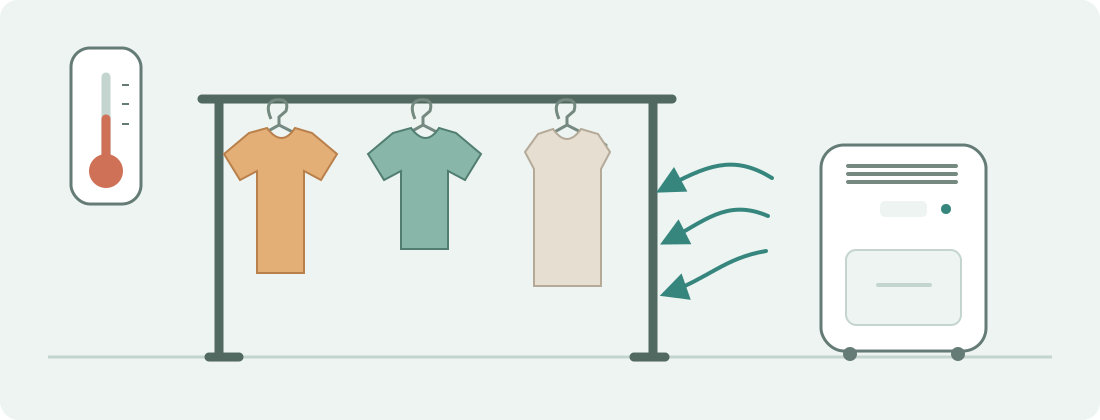
Expand the diagram
Scroll within the diagram horizontally; arrow keys work when focused.
Original schematic, not to scale. It gives no clearance measurements; follow your appliance's instructions.
Measure the room after the heating goes off
If you hang washing in the evening, check the temperature later too. A warm room at 7pm may be much colder overnight. Use that colder reading when looking through specifications.
For example, the UK specification for the compressor-based MeacoDry Arete Two 12L lists the following extraction figures:
| Room conditions | Published water extraction |
|---|---|
| 20°C and 60% relative humidity | 5.40 litres per day |
| 10°C and 60% relative humidity | 1.97 litres per day |
These figures describe the same model at the same relative humidity. Its stated operating range starts at 5°C, but that lower limit does not promise fast laundry drying there. Nor does “12L” mean a 12-litre tank: this model's tank holds 2.5 litres. Arete Two 12L specification and extraction data
Desiccant performance still needs checking. Meaco's DD8L Pro publishes 6.89 litres per day at 10°C and 7.97 at 20°C, both at 60% relative humidity on fan speed 3. That is useful evidence for considering it in a cold room, although those extraction figures do not tell you how quickly it will dry your clothes. DD8L Pro extraction data
Count loads and measure the airer
There is no reliable conversion from “litres per day” to “washing-machine loads”. The appliance collects water from the air; your basket contains fabrics with different amounts of water left after spinning.
Before buying, put a normal load on your airer and check:
- Can you leave gaps between items, including towels and sleeves?
- Will a second load overlap the first, or do you normally finish one before washing another?
- Can airflow reach both sides of a wide or two-tier airer?
- Where will the machine stand without obstructing a doorway or receiving drips?
A larger extraction rating cannot create hanging space. For two loads at once, you may need a different arrangement or staggered washing as well as more capacity. Check adjustable airflow and clearances in the manual, rather than choosing by the number of bedrooms advertised on the box.
Read laundry mode instructions before planning an overnight run
A six-hour programme is a timer setting, not a promise that every load will be dry. The Arete Two manual describes a default six-hour laundry mode with high fan speed and a low target humidity. Thick towels, folded fabric and a colder room can require a different plan. Check the clothes themselves before putting them away. Arete Two manual, laundry mode
Instructions also differ between models. The manual linked from EcoAir's current DD1 Simple MK3 page says its laundry setting runs continuously until changed manually. It advises short use of that mode and avoiding unattended laundry-mode operation. That matters if your plan is to switch it on and go to bed. Read the manual for the exact model you are considering. EcoAir DD1 Simple product page · Linked manual, laundry instructions
For advertised drying times, look for the load weight, fabrics, temperature, humidity and any extra fan used in the test. If those details are missing or differ between products, the headline times cannot establish which will be faster in your home.
Check the space around it and the sound it makes
Meaco's DD8L Pro manual recommends drying in one room with doors and windows closed, directing the outlet towards the washing and keeping the machine clear of drips. Follow the model's placement instructions and keep its inlet and outlet clear. DD8L Pro manual, drying laundry
Closing a window for a drying session does not mean blocking the home's background ventilation. Keep required ventilation working; the government's home ventilation guide explains the role of trickle vents and mechanical systems. Existing home ventilation guide
Compare noise in the setting you will actually use. The Arete Two 12L lists 35, 38 and 44dB(A) across its fan settings. The lowest advertised figure therefore does not describe every drying session. If the airer shares your living room, a lower setting and a longer available drying window may suit you better.
Emptying matters too. Check that you can remove a full tank without moving the airer. Continuous drainage can help, but the hose needs a suitable destination. The Arete Two manual requires a downward run without kinks for gravity drainage; a nearby sink is no use if the hose has to climb into it. Follow the specified arrangement for your chosen model. Arete Two manual, drainage
Make the purchase decision with five notes
Write down your lowest drying-room temperature, usual simultaneous loads, airer dimensions, deadline for dry clothes, and a workable tank-emptying or drainage plan. Use those notes to compare a short list.
If your existing heating, ventilation and available fan already get washing dry when you need it, without a persistent moisture problem, keep that arrangement. If they do not, choose the machine that addresses the actual bottleneck. Compare energy use over a drying session where evidence allows; a low hourly wattage alone does not establish the cheapest way to finish a load.
This guide uses manufacturer specifications and instructions, not hands-on testing. The named products illustrate how to read specifications; they are not a ranked buying list or a guarantee of drying time.