Frozen rice dry at the edges and cold in the middle? Start with the portion
A single frozen block can turn lunch into a guessing game: hot edges, a cold center, another trip through the microwave. Start by freezing rice in individual, evenly shallow portions, then break up the rice partway through reheating. You can do this with ordinary freezer- and microwave-safe containers.
The routine is simple: portion, chill promptly, freeze, then reheat only what you plan to eat. Here’s how to make it work for a weeknight rice bowl or a quick side dish.
Make one portion fit one meal
Choose the amount you usually eat. That might be a cup of cooked rice for a bowl, or a smaller portion to serve alongside something else.
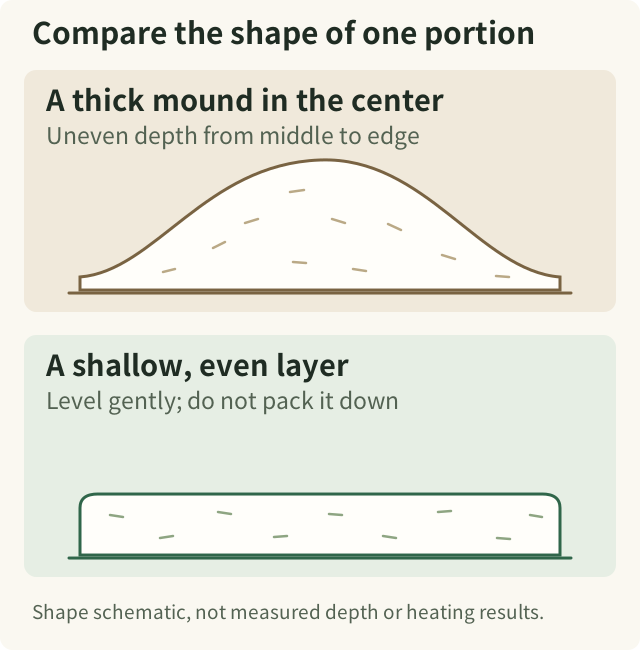
Use a clean utensil to divide the freshly cooked rice among shallow containers. Spread it into an even layer instead of leaving a mound in the center. Japan’s agriculture ministry recommends flattening warm rice before freezing to reduce uneven microwave heating. The practical idea travels well: keep the shape consistent from portion to portion. MAFF’s rice-storage guide
Expand the diagram
Scroll within the diagram horizontally; arrow keys work when focused.
An original schematic comparing portion shapes. It does not specify a universal depth or heating time, or confirm safe reheating. Break up the rice partway through heating and check its temperature as described below.
Check the container and lid separately for freezer and microwave suitability. A special rice container is optional. If your storage container cannot go into the microwave, plan to transfer the rice to a suitable dish before heating.
Chill promptly, then freeze
Don’t leave a pot of rice on the counter until it reaches room temperature. Divide it first. USDA says hot food can go directly into the refrigerator in shallow portions; it can also be rapidly chilled in an ice or cold-water bath before refrigeration. Once chilled, move the portions you want to keep into the freezer. USDA’s rapid-cooling guidance
USDA’s household leftover guidance is to refrigerate or freeze as soon as possible, always within 2 hours, or 1 hour when the temperature is above 90°F. Those are outer limits, not suggested counter-cooling times. Keep the refrigerator at 40°F or below and the freezer at 0°F. Ask USDA: handling leftovers
Seal portions for storage and label them with the cooking date and amount. Keep different batches distinguishable and put older portions where you’ll see them first. A label such as “Oct 9 · rice · 1 cup” is enough; there’s no need for a tracking app.
Reheat covered, and check the center
- Take out one portion. There’s no need to thaw it on the counter. USDA allows reheating frozen leftovers directly, although it takes longer than reheating thawed food. Ask USDA: reheating from frozen
- Use a microwave-safe dish and cover. Vent the lid or wrap as directed. If the rice looks dry, add a small splash of water rather than soaking it. Remove any foil before microwaving.
- Pause when the rice softens enough to separate. Open carefully, keeping your hands and face away from the steam. Break up the center with a clean utensil, spread the rice evenly, cover again and continue heating.
- Check the finish, not just the timer. Follow the appliance’s standing-time instructions, then use a food thermometer to confirm 165°F throughout, checking several places, including the center. Reheat and check again if any part is below that temperature. USDA recommends covering and stirring or rotating microwave leftovers. Ask USDA: reheating safely
Covering, venting, adding liquid when needed and allowing standing time are also part of USDA’s microwave guidance. Steam at the edge cannot tell you the temperature in the middle.
Adjust the shape before adding more time
If the center is cold, break up that clump before continuing. For the next batch, try a shallower layer or a smaller portion. If the edges are dry, check that the cover is being used correctly and add a little water as needed.
There isn’t one reliable “two minutes on high” rule. Wattage, portion size, thickness and container all affect the result. Start with your appliance’s directions and check the food. Once you find a useful starting setting, note the portion size alongside it; still verify each reheated serving.
Use the date to keep the freezer useful
USDA gives 3–4 months for frozen leftovers as a general storage recommendation and explains that moisture and flavor can decline with longer storage. Properly handled food kept continuously frozen at 0°F remains safe indefinitely; that does not guarantee appealing texture. You can choose a much shorter rotation for rice you eat often. Ask USDA: leftover storage
Freezing and reheating cannot rescue rice that was left out too long. Rice is associated with Bacillus cereus, and its preformed vomiting toxin is heat-resistant. Discard mishandled rice rather than trying to fix it in the microwave. FoodSafety.gov’s rice-related guidance, FDA’s explanation of the toxin
For the next batch, keep the experiment small: the portion you actually eat, an even layer, and a date label. That makes tomorrow’s rice easier to find, heat and use.
Sources checked: October 9, 2026 (Japan Standard Time). This guide covers home-cooked plain rice. Follow the package instructions for commercially frozen rice.