Hear one change in a theme and variations
Pick a short musical theme, hear one variation, then return to the theme. Your task is to leave with one description of a change and one question you still have. You do not need to read a score, name every instrument, or finish a whole set of variations.
A theme provides the basis for the variations that follow. Changes may involve rhythm, tonality, or dynamics, among other possibilities. Treat the theme as a reference you can revisit, rather than expecting its melody to remain equally easy to hear throughout. School Curriculum and Standards Authority glossary
Start with an official demonstration
Open Carnegie Hall’s Theme and Variations lesson. The page offers an Ensemble Connect video and discussion prompts. Its written prompts identify several ways of transforming a theme, including rhythm, added notes, harmony, articulation, instrumentation, and pitch range.
Use the demonstration to locate a theme and one transformation you want to compare. Keep the same video for this first attempt. Switching performances midway would give you another set of differences to consider.
The page text was checked for this article; the video was not played. There is no verified timestamp guide here. Use the explanation and any labels available in the demonstration to identify your chosen passage. If you cannot establish a boundary, leave its number unspecified rather than guessing.
If the video will not play, you can prepare the note below and use the method with another clearly identified official performance. Access to a particular player is not a prerequisite for understanding the exercise.
Give your attention one job
Listen to the theme and choose a feature you think you could follow again. Perhaps you notice a rise and fall in pitch, a repeated rhythmic shape, or a place that sounds like a pause. These are possible listening questions, not claims about what happens in the linked video.
Write a few words before continuing. You can hum if that helps, but it is optional. A rough line on paper can also serve as a memory aid. It represents your impression, not a measured waveform or a musical transcription.
Now choose just one question for the variation:
- Does the movement of the notes feel more or less busy?
- Does the sound seem to reach higher or lower?
- Do the notes sound more connected or more detached?
Here, connected or detached concerns articulation: how notes are joined or separated. You can use ordinary words without identifying a specific playing technique. These questions turn some of Carnegie Hall’s listed dimensions into a small, article-created exercise. Choosing one dimension limits your attention; it does not imply that the music changes only one thing.
Compare and then return
Hear your selected variation with that question in mind. Resist the urge to collect every difference at once. If another feature catches your attention, jot it down for later and return to the question you chose.
Open the original listening guide
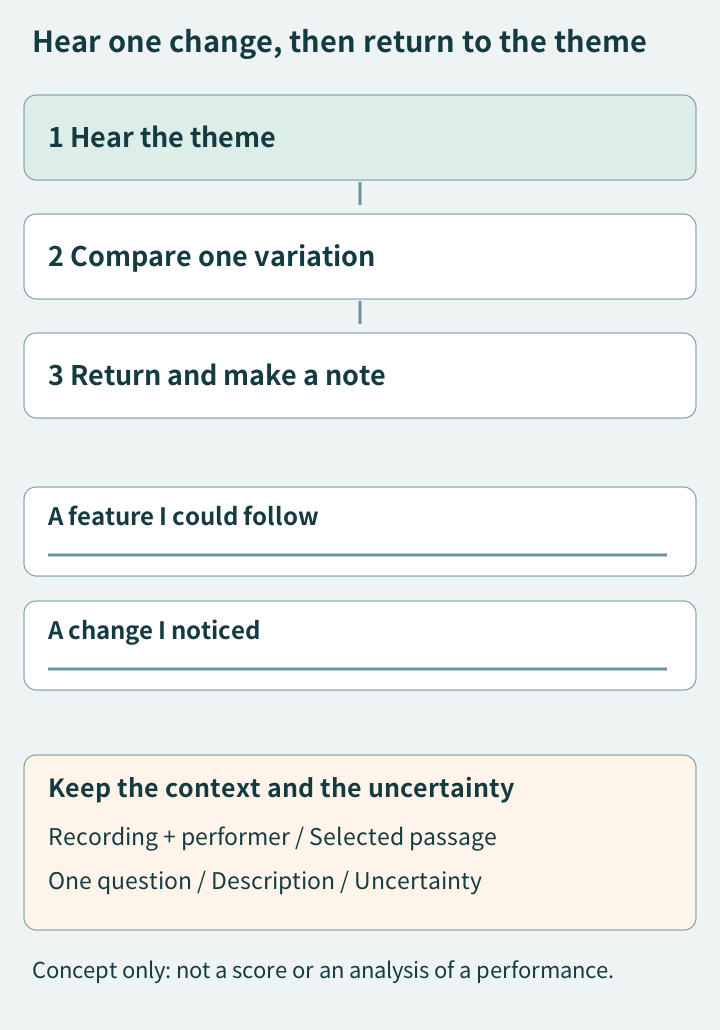
The diagram follows three steps: hear the theme, compare one variation, then return and make a note. It separates “A feature I could follow” from “A change I noticed.” This is an original conceptual guide, not a score, waveform, or analysis of Mozart’s music or the Carnegie Hall performance.
Go back to the theme in the same recording. Does your comparison still seem right? Edit the note if the return changes your mind. You are making a record of this attempt, so the first wording does not need to survive unchanged.
If your only description is “busier,” use another pass to ask what created that impression. Were there more small movements between recognizable points? Did several things seem to happen together? Leave those as questions if you cannot distinguish them. A busy impression alone is not enough to establish that the underlying pace became faster.
Keep a small listening record
Use paper or a notes app you already have. Make five short entries:
- Recording page and performer, if identified: _____
- Variation or passage compared: _____
- My one listening question: _____
- A difference I noticed after returning to the theme: _____
- Something I am still unsure about: _____
This blank record was devised for the article. It is not a copied worksheet or a completed analysis. If you add a playback position, use one you checked in your chosen recording; do not transfer it to another performance.
You can add a separate line for mood. An emotional response and a description of sound do different jobs in your note. “Restless” may describe your experience without telling you which musical feature prompted it. You do not have to replace that response with somebody else’s preferred adjective. Nor do you have to claim you can still follow the original tune when you cannot.
Try a second work when you want to
For another example, PTNA’s Piano Encyclopedia entry identifies Mozart’s Twelve Variations on “Ah, vous dirai-je, maman,” K.265, for solo piano, and lists association and partner performance links. The page is in Japanese; the catalogue number helps identify the work. Familiarity with the tune is optional.
An older Kyoiku Shuppan teaching worksheet, page 1 identifies its theme and twelve variations. That structure does not make twelve completed comparisons your assignment. Choose one variation and reuse your question, or stay with the first demonstration and try a different question.
Finish when you have made one comparison and recorded what remains uncertain. If you heard no clear difference along your chosen dimension, write that. A useful next attempt begins with an honest note about where this one stopped.
Sources and checking scope
- Carnegie Hall lesson: official demonstration entry and transformation categories
- SCSA glossary: musical form
- PTNA work entry: Mozart work identity and listed performances
- Kyoiku Shuppan PDF: work structure
Sources checked October 10, 2026, Japan time. Page and PDF text were checked; audio playback, captions, regional availability, and reader testing were not. No score, lyrics, recording, photo, or worksheet is reproduced. Linked media availability may change; check the official page when using it.