How does a plant bend toward a window?
A seedling seems to lean closer to the window every time you look. How does it curve without anyone bending it? In a young shoot, unequal growth on the two sides can turn the stem toward the light. That directional growth response is called phototropism.
Start with the outside of the curve
Picture a slender shoot curving toward a window on its right. The right side is the inside of the bend; the left side is the outside. Two lines following that curve will have different lengths: the outer line is longer.
That simple geometry helps explain the movement. In a typical young shoot responding to light from one side, cells on the side away from the light elongate more than those on the lit side. The longer side becomes the outside of the bend, bringing the tip toward the light.
It can feel backward. Surely the sunny side should grow more? For this response, the useful comparison is between the two sides of the growing shoot. Greater extension on the side away from the window is precisely what can bend it toward the window. OpenStax’s explanation of light responses
See the two-frame illustration of unequal growth
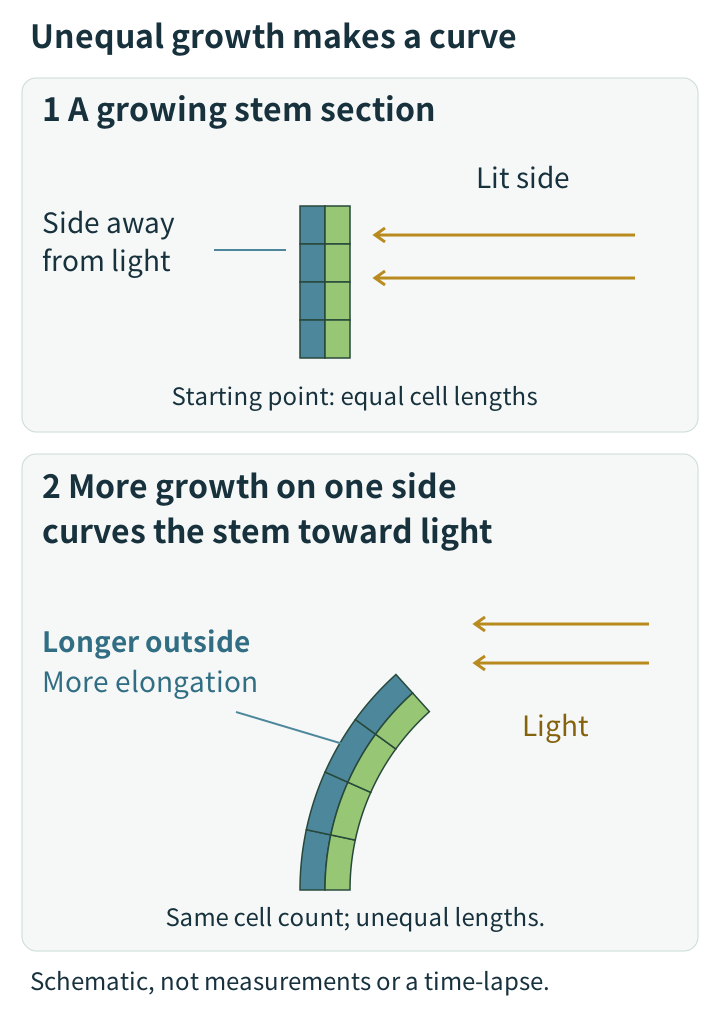
The illustration is a schematic, not a before-and-after photograph. Cell sizes and the bend are exaggerated for clarity; they are not measurements from an experiment. The colors identify the two sides, not a substance you could see in an ordinary photograph.
Light changes where growth happens
Plants have proteins that detect light. In seedling phototropism, blue-light receptors called phototropins play an important role. Daylight contains blue wavelengths, so the response does not require a blue lamp on your windowsill.
The signal affects the transport of auxin, a group of plant hormones involved in regulating growth. Auxin is a chemical signal, not a special kind of cell. In the growing shoot, stronger auxin activity on the shaded side helps produce the greater cell elongation associated with bending.
Researchers have investigated the connection between light sensing and auxin transport using Arabidopsis seedlings. One primary study examined the roles of a phototropin and auxin-transport proteins, showing how the light signal can alter auxin movement before differential growth becomes visible. The original auxin-transport study
This gives the apparently purposeful movement a physical explanation. Local responses can change the shape of the whole shoot without the plant surveying the room and choosing a destination. It also sets a limit on what home observation tells you: watching a stem bend does not let you directly see, or measure, its hormones.
Follow one growing shoot
Choose a single young shoot rather than treating the whole pot as one object. Look for the difference between an older, firmer section and a part that is still extending. That gives you a more specific question than “Has my plant moved?”
A short note can record three things:
- Which side of the shoot faces the window or lamp?
- Is the change in the stem, a leaf stalk, or the position of the entire pot?
- Which part has grown since your previous look?
A shadow near the stem can help you think about the direction of light. It is only a clue: another lamp and reflections from the room can contribute too. You might find that the brightest side changes between morning and afternoon, even though the pot stays still.
If you take comparison photographs, leave the pot in place and use the same viewpoint. Include the date, approximate time, and whether a curtain or blind was open. A recognizable leaf or node can help you find the same section again. You are making a record, not promising that the plant will bend by a certain angle in a set number of days.
A sequence showing little obvious change is still a valid observation. It may simply mean that you could not distinguish growth under those conditions. Do not force a dramatic result by withholding normal care or repeatedly moving the plant.
Not every plant movement answers the same signal
A shoot that grows upward after a pot is laid on its side is responding to gravity as well as its other surroundings. That response is called gravitropism. A plant can respond to both gravity and light; a curve alone does not isolate which signal caused every part of its shape.
Leaves that fold at night or change angle through the day also need their own explanation. Daily rhythms and other movement mechanisms should not be treated as identical to the unequal stem elongation in this illustration. Seeing a shoot lean toward a window does not establish that it tracks the Sun all day. Plant sensory systems and responses
Nor does auxin have the same effect in every organ. In roots, its concentration and context can lead to inhibited elongation. “More auxin always means a longer side” is therefore not a rule for the entire plant. The example here concerns a young shoot bending toward light.
Understanding the curve is different from prescribing care
A directional growth response cannot, by itself, tell you whether the plant gets enough light. Nor does one leaning stem diagnose a disease or tell you how often to rotate the pot.
If you are also noticing unusually long spaces between leaves or pale foliage, identify the plant and check its particular lighting needs. The University of Minnesota’s guide discusses signs of insufficient light and matching indoor plants to the conditions available. Indoor-plant lighting guidance
There is no universal instruction here to rotate every plant frequently or move it abruptly into strong sun. Begin with a closer look at the shoot you already have. Which side forms the outside of the curve? Where is fresh growth appearing? That small bend becomes a visible connection between information from light and the way living tissue grows.
Sources and verification
Educational material, primary research, and horticultural guidance were checked on October 10, 2026 UTC. The illustration and observation prompts are original. No growing trial, time-lapse sequence, or hormone measurement was performed for this article.