Is this container microwave-safe? Read the lid separately
Check the heating mode, the container body, and the lid before using an unfamiliar container. A heat-resistance number or material name alone does not establish microwave suitability. If the instructions are missing, use a different container whose intended use you can verify rather than running a heating experiment.
- Microwave use and all conditions are clear: follow the instructions for each part
- The body is approved but the lid is unclear: pause and check the lid instructions
- You have only a temperature rating or material name: find the product’s intended-use guidance
This is a useful check for the lunch container at work as well as the dish at home. A lid can fit neatly and still have different limits from the bowl beneath it. Knowing which familiar container you can use, and how, saves more uncertainty than memorizing a list of supposedly safe materials.
Start with the mode you will actually select
A combination appliance may offer microwave, convection, broil, or combined cooking. Those modes are not interchangeable when choosing containers. Read the appliance manual for the selected function before relying on a microwave-safe label. A shortcut button’s name alone may not tell you which heating methods it uses.
The FDA’s microwave guidance directs users to cookware made for microwave use and the operating instructions for their oven model. That is the starting point, rather than an improvised material test. A dish suitable for a conventional oven does not automatically qualify for microwave mode, either.
Treat supplied racks and trays as model-specific accessories. Use them only in the combinations the appliance instructions allow. A metal rack supplied for one function is not permission to put an unrelated metal food container into another. If you cannot identify the mode, stop before loading the appliance.
Read the body and lid as separate parts
Find the product name or number, then check the body, lid, seal, and any insert mentioned in its instructions. Look for the intended use and conditions, not just the most prominent symbol. If a marking is unfamiliar, use the manufacturer’s explanation rather than assigning a meaning from a similar-looking online picture.
The US Pyrex FAQ provides a concrete distinction: its plastic covers are described for microwave and storage use, but not conventional or convection ovens. For its microwave cover guidance, the FAQ requires breaking the seal and placing the cover off-center so steam can escape. That does not establish the instructions for every glass container, every cover, or products sold under related branding elsewhere. Match the guidance to what you own.
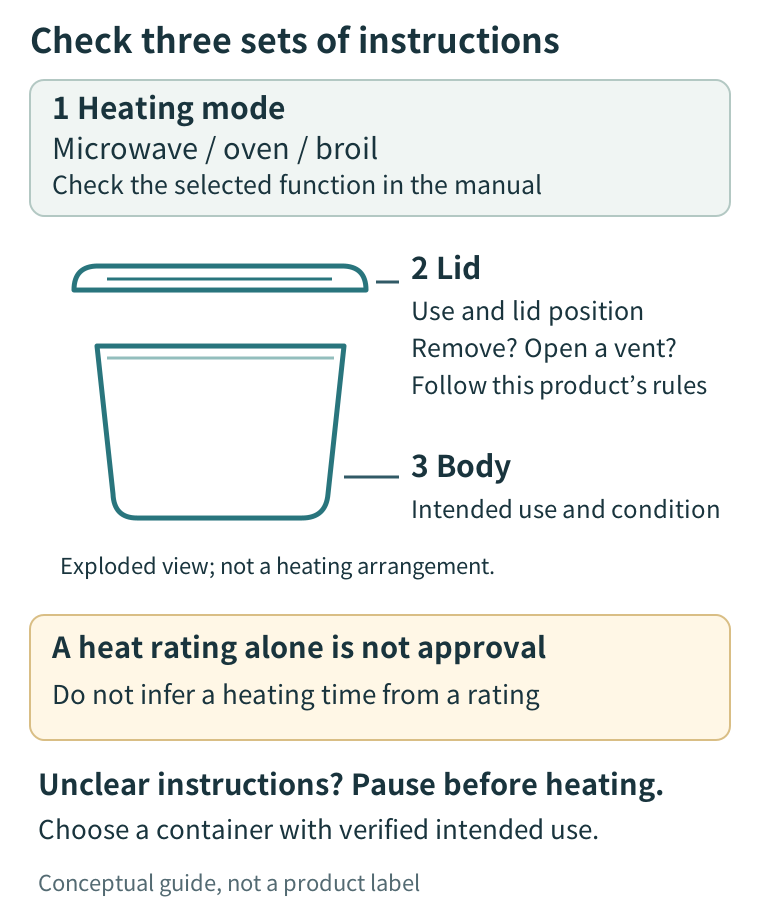
Expand the diagram
Scroll within the diagram horizontally; arrow keys work when focused.
Figure: A reading guide, not a copy of a product label. No universal lid position or temperature threshold is shown.
The next question is how the lid must be used. For example, Ziploc’s US Twist ’n Loc small-container instructions say to unscrew or remove the lid before microwaving and prohibit conventional-oven, browning-element, and stovetop use. Those are instructions for that product, not a rule that every microwave lid should be handled the same way.
Some products specify removing a lid; others prescribe venting or a particular closure arrangement. Follow the actual design’s instructions. Do not assume that “leak-resistant” means approved for heating while tightly sealed. A replacement lid that happens to fit also needs a verified match.
A temperature number answers only part of the question
A temperature rating is not a microwave power setting or a safe number of minutes. It cannot be converted into a heating time for whatever food happens to be inside. Similarly, identifying a plastic as polypropylene does not tell you the intended use of that specific finished product.
Japanese labels illustrate this distinction particularly clearly. The Consumer Affairs Agency’s guidance for molded plastic food containers separates material, heat resistance, and handling precautions, including microwave-use restrictions or conditions. It also addresses different materials and heat ratings for different parts. This explains a Japanese labeling context; it is not a US certification checklist.
Do not transfer another country’s appliance-maker temperature threshold to your own microwave. Instead, check that your container’s intended use and your appliance’s requirements agree. If they do not, choose another verified container or ask the maker to clarify.
Glass and previous successful use are not shortcuts
For glass, find explicit product guidance, including limits on heating methods and sudden temperature changes. “Glass” describes a material category, not a complete set of use instructions. Even within a matching storage set, the lid may have a much narrower permitted use than the body.
Condition matters, too. Pyrex’s FAQ tells owners not to continue using its chipped, cracked, or deeply scratched glassware, and says warped covers cannot be reshaped. Treat visible damage as a reason to stop and consult the applicable care guidance, rather than pressing a misshapen lid back into service.
Previous uneventful heating does not supply missing instructions. It tells you what happened on that occasion, without establishing suitability for a different food, mode, duration, or damaged part. Do not use an empty-container or small-amount heating trial as a substitute for identification.
Keep a usable answer for next time
Start with one container you use regularly. Record its product number, approved mode, lid instructions, and the official page or packaging that explains them. If the labeling has worn off, check the purchase record and match the exact model and parts. Similar size and color are not enough.
If an unidentified takeout box is the problem, transferring the food to a verified microwave-suitable dish is usually a simpler decision than investigating every resin marking. You do not need to replace all your containers to establish one dependable option for the task.
Finally, container suitability does not establish that food has been heated sufficiently. Follow the food’s separate preparation and storage directions. Containers and escaping steam can be hot, so observe the product’s handling and opening precautions. The useful answer is specific: this body, this lid arrangement, this appliance mode, and these instructions.
Sources checked October 11, 2026. No physical container or food-heating tests were performed. This is a label-reading guide, not product certification or a reheating-time recommendation. Recheck the exact product and appliance instructions before use.